This is the second post in our tax-planning series. Last time, Bain explained why we keep talking about Roth conversions. Today: why we keep talking about generosity, and how a little planning makes it go further.
Many financial advisors steer around this topic. We don’t.
We believe generosity isn’t a footnote to a good financial plan. For a lot of the families we work with, it’s one of the main reasons the plan exists. So I want to spend a few minutes on how we actually think about giving at Nickels Wealth, and why the conviction side and the planning side aren’t always two separate conversations.
The “Why” Comes First
For many of our clients, and for my own family, giving starts with conviction. Notice I didn’t say compulsion, but I’ll leave that sermon to the preachers. The biblical principle is straightforward: what we have was entrusted to us, not earned outright, and we’re meant to hold it open-handed. Tithing and giving shouldn’t be a tax strategy dressed up in faith language. They come first, and the planning follows.
But here’s what I’ve noticed during my years in the business as well as in everyday life: even if you don’t share that conviction, generosity still belongs in a financial plan. People who give on purpose tend to hold money a little more loosely and worry about it a little less. The giving shapes the plan, and a good plan makes the giving sustainable. The two reinforce each other.
The “How”: Three Ways to Give Well
Now once you’ve decided to give, the question becomes how, and this is where good planning genuinely saves you money. Money that can go to your church, a cause you love, or even your own pocket, instead of to the IRS.
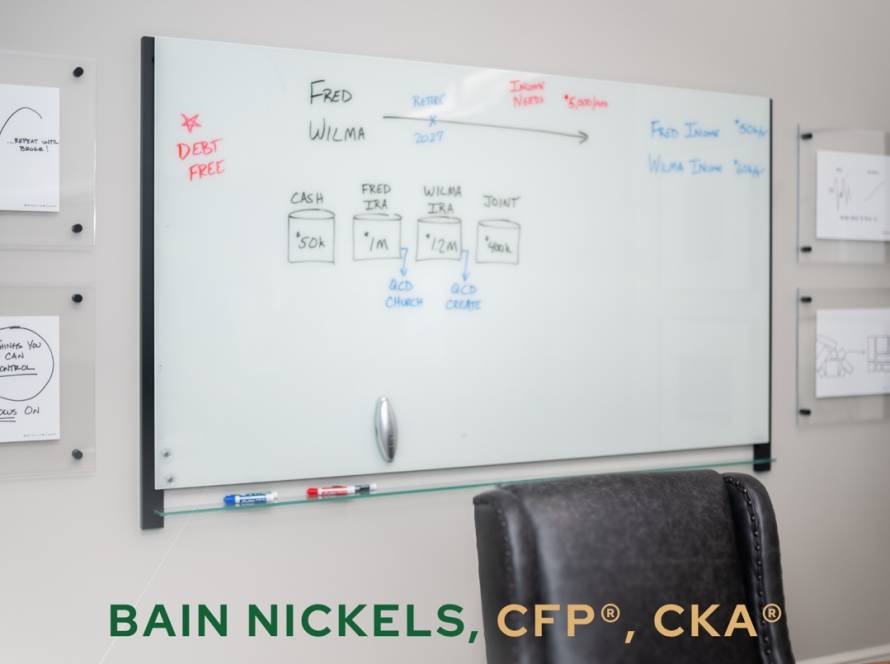
- Qualified charitable distributions (QCDs). If you’re 70½ or older, you can send money directly from an IRA to a charity. It satisfies your required minimum distribution and doesn’t show up as taxable income. For a lot of retirees, this is the single most efficient way to give.
- Donor-advised funds. Think of this as a charitable savings account. You contribute, sometimes in a higher-income year, take the deduction now, and recommend grants to your church or favorite ministries over time. It’s especially useful for “bunching” several years of giving into one.
- Gifting appreciated assets. Instead of giving cash, give investments that have grown in value. You skip the capital gains tax you’d owe if you sold it, and the charity still receives the full amount. You give more, and it costs you less. Then what you didn’t donate out of your cash flow, you can put back into your investment account and raise what is called the “cost basis,” essentially saving you taxes when you do go to pull money out for yourself down the road.
Where the two meet
Here’s the part I care about most. When the “why” and the “how” line up giving stops being something you squeeze in at year-end and becomes something built into the plan from the start.
That’s the goal. Not giving as an afterthought, but giving as one of the things the whole plan is designed to make possible.
If giving is already part of your financial life, or you’d like it to be, we’d love to talk it through with you. Reach out at hello@nickelswealth.com or call 662.327.4607.
Next in the series: Tracey on tax-efficient investing — how to keep more of what your investments earn.